


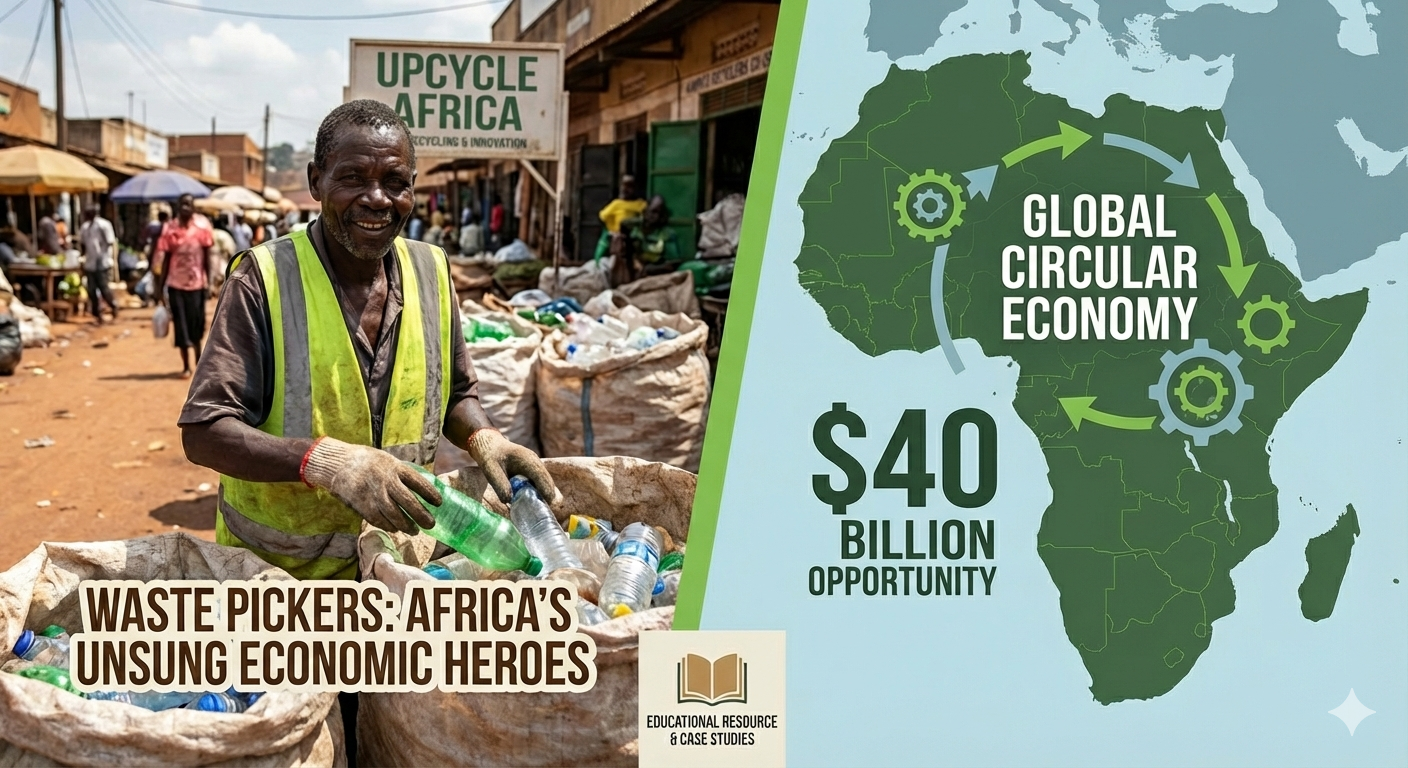
Moving beyond the stigma to recognize the informal waste sector as the backbone of the global circular economy, from global trends to the streets of Kampala.
Introduction: The Invisible Engine
When we throw something “away,” we rarely consider where “away” is. For millions of tons of global waste, “away” is the workplace of an invisible workforce.
They are known by many names: Catadores in Brazil, Zabaleen in Egypt, reclaimers in South Africa, and waste pickers globally. They are the individuals who salvage recyclable materials from streets, landfills, and dumpsites, reintegrating them into the economy.
Often stigmatized and marginalized, these workers are, in reality, environmental frontline defenders and crucial economic agents. The premise of this article is bold but backed by data: the informal sector is holding the key to a potential $40 billion opportunity in resource recovery across emerging economies.
This blog explores the vital role of waste pickers from a global perspective, narrowing down to the African context, and finally providing a deep dive into the specific dynamics in Uganda. It is designed as a resource for educators, researchers, and policymakers seeking to understand the human element of the circular economy.
1. The Global Context: A Shadow Economy of Essential Workers
To understand the African context, we must first grasp the global scale of informal waste recovery. Waste picking isn’t an anomaly; in many parts of the Global South, it is the primary recycling system.
Who are they?
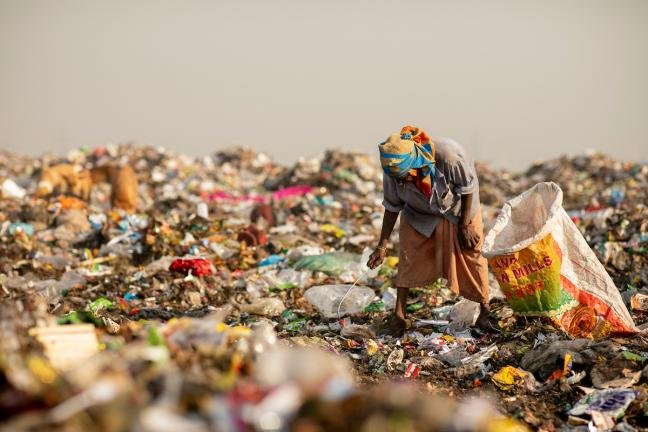
A waste picker is defined by the International Labour Organization (ILO) as someone who collects, sorts, and sells recyclable materials from waste streams for a livelihood. They operate independently, outside of formal municipal contracts.
The Statistics: A Global Snapshot
- The Workforce: The ILO estimates there are between 15 and 20 million waste pickers globally.
- Recycling Rates: In many developing countries, the informal sector is responsible for recovering 50% to nearly 100% of all waste that gets recycled.
- Climate Impact: By diverting organic waste and recyclables from landfills, waste pickers significantly reduce methane emissions—a potent greenhouse gas. Their work is a direct, unpaid contribution to global climate mitigation efforts.
Without these workers, global recycling rates would plummet, and municipal waste management systems, already strained, would collapse entirely.
2. The African Lens: Urbanization and the Circular Economy
Africa is urbanizing faster than any other continent. According to the UN, Africa’s urban population is projected to triple by 2050. This rapid growth brings a parallel explosion in waste generation.
In many African cities, municipal governments lack the infrastructure and budget to collect all generated waste. The UN Environment Programme (UNEP) notes that in many African cities, less than half of the solid waste produced is formally collected.
This gap is where the waste picker steps in.
The Economic Argument: The “$40 Billion” Opportunity
The “$40 billion” figure represents the estimated unrealized economic value of recyclable materials discarded annually in developing economies. Currently, waste pickers capture only a fraction of this value because they sit at the bottom of a predatory value chain.
- They supply the raw material: Waste pickers collect plastics, metals, cardboard, and glass.
- They feed the formal industry: These materials are sold to middlemen (aggregators), who then sell to formal recycling plants and manufacturers at a significant markup.
- The Value Gap: While a waste picker might earn less than $5 a day, they provide the essential feedstock for multi-million dollar recycling industries.
In Africa, waste pickers are not just surviving poverty; they are subsidizing the formal waste management sector and the recycling industry with cheap labor.
3. Deep Dive Case Study: Uganda—The Pearl’s Plastic Challenge
Uganda provides a compelling microcosm of these global and continental trends. The capital, Kampala, is a vibrant, rapidly growing city facing an acute waste management crisis.
The Kampala Context
Kampala Capital City Authority (KCCA) estimates that the city generates approximately 1,500 to 2,000 tonnes of garbage daily.
- The Collection Gap: Only about 40-50% of this waste is formally collected by KCCA and delivered to the Kiteezi landfill (which is itself critically overburdened).
- The Remainder: The uncollected waste ends up in drainage channels, burned in backyards, or scattered in informal settlements, contributing to flooding and health crises like cholera.
The Ugandan Waste Picker Profile
In Kampala, thousands of individuals make a living by intercepting waste before it hits the landfill or by working directly on the landfill sites.
- Demographics: Many are women, youth, and internal migrants fleeing rural poverty.
- Materials: The primary focus in Uganda is polyethylene terephthalate (PET) bottles, hard plastics (jerrycans), scrap metal, and cardboard.
- The Value Chain: A waste picker in a Kampala slum might collect 20kg of plastic bottles a day. They sell this to a middleman in Kisenyi (a hub for recyclables in the city). That middleman aggregates tons and sells it to a Chinese-owned export firm or a local manufacturer like Coca-Cola’s recycling partners.
Crucial Insight for Researchers: In Uganda, the connection between waste picking and youth unemployment is profound. For many young men in urban centers, collecting scrap metal (often termed crap locally) is one of the few accessible daily-wage jobs.
4. The Human Cost: Barriers and Challenges
It is vital for educators not to romanticize this work. While economically valuable, it is hazardous and often degrading.
- Health Hazards: Pickers are exposed to medical waste, toxic chemicals, rotting food, and dangerous sharp objects without protective gear. The recent tragic landfill slide at Kiteezi in Kampala highlights the lethal dangers of working in unregulated dumpsites.
- Stigmatization: Waste pickers are often viewed by the public and authorities as nuisances, criminals, or scavengers, rather than essential service providers.
- Exploitation: They have no bargaining power and are at the mercy of fluctuating global commodity prices dictates by middlemen.
- Lack of Social Safety Nets: No health insurance, no pensions, and no legal recognition.
5. Pathways Forward: Integration and Recognition (Case Studies)
The narrative is shifting from “eradicating” waste picking to “integrating” waste pickers. The goal is to formalize their role, improve their conditions, and unlock that $40 billion potential more equitably.
Successful Integration Models:
- Global Case Study: Brazil’s National Policy: Brazil is a pioneer. Their National Solid Waste Policy legally recognizes waste picker cooperatives as service providers. Municipalities are encouraged to contract these cooperatives for recycling collection, paying them for the service, not just the material.
- African Case Study: South Africa’s Guidelines: South Africa has developed “Waste Picker Integration Guidelines for South Africa.” This is a policy framework designed to help municipalities formally include reclaimers in the waste management system, providing them with registration, uniforms, and safer sorting spaces.
What Needs to Happen in Uganda and Beyond?
- Registration and ID: Simple municipal IDs can protect pickers from police harassment.
- Formation of Cooperatives: By organizing, waste pickers can aggregate more volume and bypass exploitative middlemen to sell directly to formal recyclers.
- Source Separation: Educating households to separate recyclables from organic waste makes the pickers’ job cleaner, safer, and more efficient.
Conclusion: Redefining Value
If Africa is to capitalize on the “$40 Billion Opportunity” of the circular economy, it cannot do so by ignoring the very people running the current system.
Waste pickers are not part of the problem; they are the only currently viable solution operating at scale in many African cities. For educators and researchers, the task is to change the narrative—to reframe these individuals not as scavengers at the margins of society, but as central actors in environmental sustainability and economic resilience. Recognizing their value is the first step toward a cleaner, more equitable future.
Recommended Resources for Educators and Researchers
- WIEGO (Women in Informal Employment: Global Organizing): The leading source of data and advocacy for informal workers, including excellent reports on waste pickers globally.
- The International Labour Organization (ILO): Reports on green jobs and the informal economy.
- UN-Habitat’s “Waste Wise Cities” Campaign: Data on municipal solid waste management globally.
- Global Alliance of Waste Pickers: The international networking body for waste picker organizations.
- Academic literature focused on “Urban Political Ecology of Waste in Kampala.”
Post a comment
Related Posts

January 7, 2026
How Weston Fuller Is Forcing Us to Confront Plastic Pollution
A diver emerges from the deep, spear gun in hand. But instead of a living…
January 3, 2026
The Plastic Paradox: Navigating Africa’s Waste Crisis in 2026.
By: Johnmary Kavuma | January 3, 2026 Africa stands at a critical environmental and economic…

March 24, 2025
How Can African Communities Attain Climate Justice?
As the impacts of climate change accelerate, African communities find themselves at the crossroads of…