

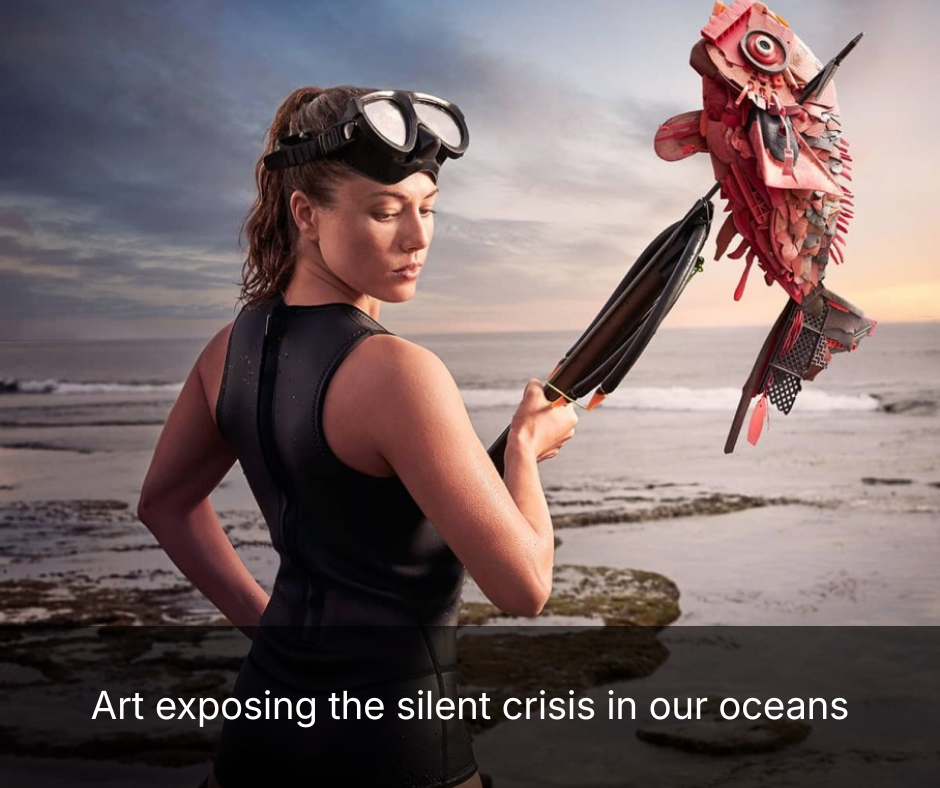
A diver emerges from the deep, spear gun in hand. But instead of a living fish, he holds something far more unsettling a fish made entirely of plastic.
The image is jarring. Uncomfortable. Impossible to ignore.
This powerful visual, created by Portuguese artist Ricardo Ramos and photographed by Weston Fuller, is more than just art. It is a mirror held up to humanity reflecting the consequences of our convenience, consumption, and collective inaction. It forces a simple yet haunting question into our minds: If this is what we pull from the ocean today, what will be left for tomorrow?
The Power of Conceptual Photography
In a world saturated with images, standing out has become one of the hardest creative challenges of our time. Yet conceptual photographer Weston Fuller has mastered the rare ability to cut through the noise—not by being louder, but by being deeper.
Looking at Weston’s work feels like entering a different mental dimension. His images balance precision with playfulness, clarity with imagination. They are not accidental; they are intentional stories frozen in a single frame. Every element serves a purpose. Every detail nudges the viewer toward reflection.
What makes his work exceptional isn’t just technical skill—it’s the way his visuals bypass logic and go straight to the conscience.
From Theory to Impact
Weston’s journey wasn’t built on talent alone. After earning his MFA in Photography from the Academy of Art University (AAU) in San Francisco, he grounded his creativity in strong theory and technical mastery. With the fundamentals internalized, imagination became his primary tool.
The result? A career decorated with top industry awards, global recognition, and high-impact campaigns for organizations that matter.
From illustrating the alarming decline in bird populations for the National Audubon Society to creating haunting imagery that exposes the reality of plastic pollution, Weston’s work proves that photography can be more than beautiful it can be necessary.
Plastic in Our Oceans, Plastic on Our Plates
The plastic fish image is especially unsettling because it speaks a truth many prefer to ignore: plastic doesn’t disappear. It breaks down. It fragments. It enters marine ecosystems and eventually, it enters us.
Microplastics are now found in:
- Fish and seafood
- Drinking water
- Salt
- Even the human bloodstream
What was once an environmental issue is now a public health crisis.
Weston’s photography doesn’t rely on shock for shock’s sake. Instead, it creates a quiet moment of realization the kind that lingers long after you scroll past.
Art as a Call to Action
What sets Weston Fuller apart is not just his ability to create striking visuals, but his willingness to give back. Based in Southern California, he remains active in the APA San Diego chapter, mentors emerging creatives, and stays accessible in an industry that often feels unreachable.
This matters.
Because change doesn’t happen in isolation. It happens when knowledge is shared, when creativity is nurtured, and when responsibility is passed forward.
What Can You Do?
This blog isn’t just about admiring great photography it’s about responding to it.
Here are simple but meaningful actions you can take today:
- Reduce single-use plastics: Carry reusable bottles, bags, and containers.
- Support organizations fighting plastic pollution and protecting marine life.
- Choose brands responsibly reward companies that prioritize sustainability.
- Use your voice: Share powerful art and stories that spark awareness.
- Create with purpose: If you’re an artist, designer, or storyteller, use your platform to speak for what can’t speak for itself.
The Future Is Still Ours to Shape
Weston Fuller’s work reminds us that imagination is not an escape from reality it’s a tool to reshape it.
If a single image can make us pause, question, and feel uncomfortable, then it can also inspire us to act.
The oceans are still alive. The story isn’t finished.
The question is: what will we choose to create next more plastic, or a future worth photographing?
Post a comment
Related Posts
January 5, 2026
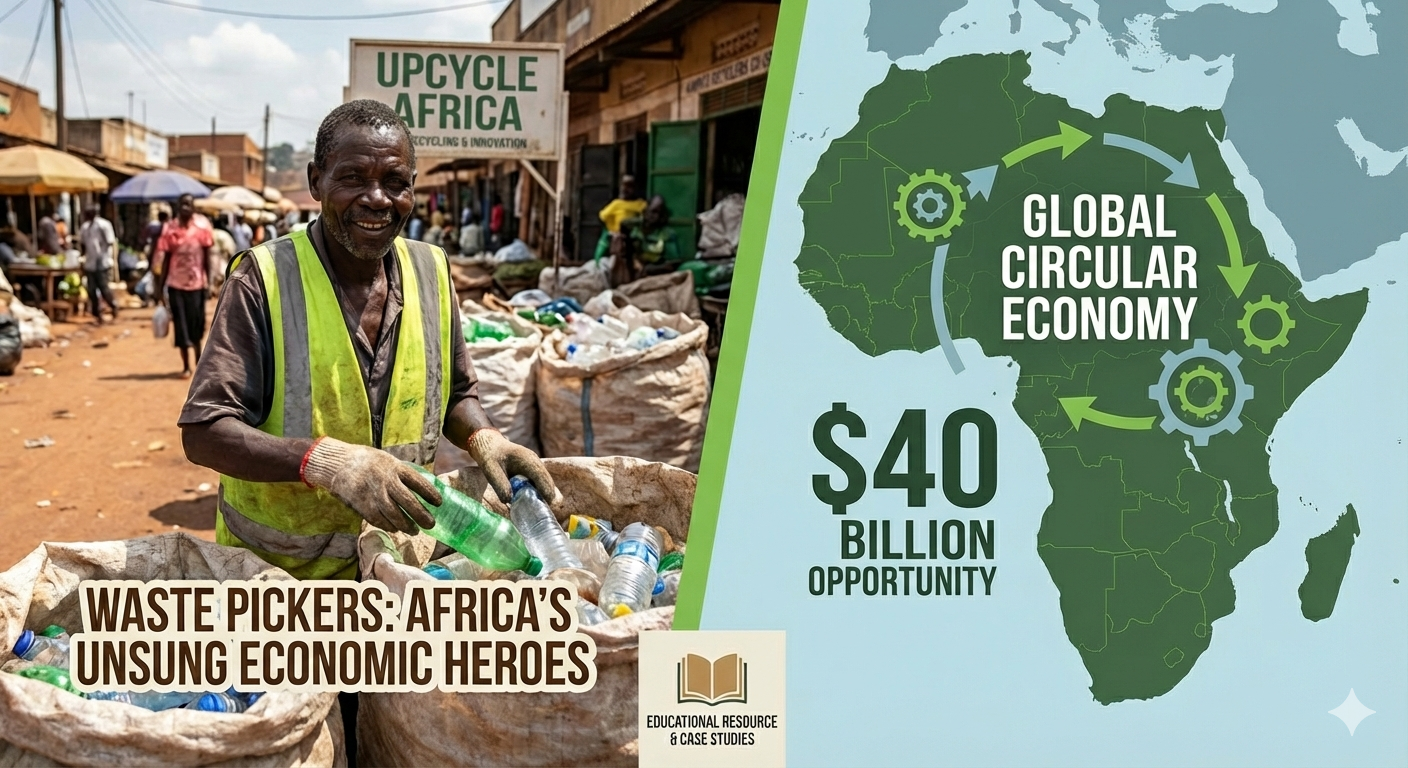
The $40 Billion Opportunity: How Waste Pickers are Africa’s Unsung Economic Heroes
Moving beyond the stigma to recognize the informal waste sector as the backbone of the…
January 3, 2026
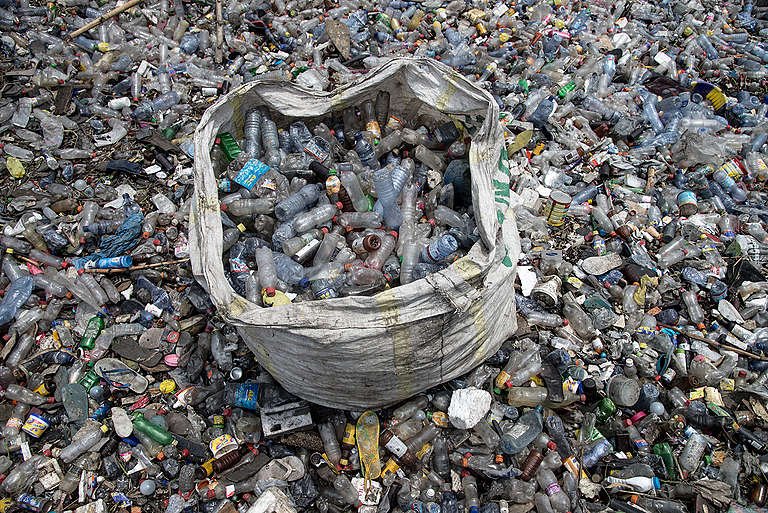
The Plastic Paradox: Navigating Africa’s Waste Crisis in 2026.
By: Johnmary Kavuma | January 3, 2026 Africa stands at a critical environmental and economic…
March 24, 2025
How Can African Communities Attain Climate Justice?
As the impacts of climate change accelerate, African communities find themselves at the crossroads of…